|
Flags / פֿאָנען
יעדע מלוכה־פֿאָן דערציילט אַ יחיד־במינודיקע געשיכטע וועגן דעם פֿאָלק, דער היסטאָריע און די ווערטן פֿונעם לאַנד וועלעכס זי רעפּרעזענטירט. די קאָלירן און סימבאָלן אויף אַ פֿאָן גיבן איבער וויכטיקע באַגריפֿן ווי, למשל, שלום, פֿרײַהייט, קוראַזש און אַחדות. פֿענער ציט מען אַרויף בשעת נאַציאָנאַלע יום־טובֿים, ספּאָרטפֿאַרמעסטן און אָפֿיציעלע צערעמאָניעס, וואָס דאָס שאַפֿט אַ געפֿיל פֿון שטאָלץ און אָנגעהעריקייט; דערנאָך לאָזט מען זיי צוריק אַראָפּ. אין אַ שעה פֿון טרויער לאָזט מען פֿלאַטערן די פֿאָן האַלב אַראָפּגעלאָזט ווי אַ סימן פֿון דרך־ארץ און דערמאָנונג. דאָס באַווײַזן אַ פֿאָן און באַהאַנדלען זי איידל ווײַזן אַרויס כּבֿוד פֿאַר דער מלוכה און דעם פֿאָלק וואָס זי רעפּרעזענטירט. טשיקאַווע: כּמעט אַלע מלוכה־פֿאָנען זענען אין דער פֿאָרעם פֿון אַ גראָדעק, אַחוץ דער פּענטאַגאָנאַלער פֿאָן פֿון נעפּאַל!
[YÉDE MELÚKhE-FON DERTSÉYLT A YÓKhED-BEMÍNEDIKE GEShÍKhTE VEGN DEM FOLK, DER HISTÓRYE UN DI VERTN FÚNEM LAND VÉLEKhS ZI REPREZENTÍRT. DI KOLÍRN UN SIMBÓLN AF A FON GIBN ÍBER VÍKhTIKE BAGRÍFN VI, LEMÓShL, ShÓLEM, FRÁYHAYT, KURÁZh UN ÁKhDES. FÉNER TSIT MEN ARÚF BEShÁS NATSYONÁLE YONTÓYVIM, SPÓRTFARMÉSTN UN OFITSYÉLE TSEREMÓNYES, VOS DOS ShAFT A GEFÍL FUN ShTOLTS UN ÓNGEHERIKEYT; DERNÓKh LOZT MEN ZEY TSURÍK ARÓP. IN A ShO FUN TRÓYER LOZT MEN FLÁTERN DI FON ARÓPGELOZT VI A SÍMEN FUN DERKhÉRETS UN DERMÓNUNG. DOS BAVÁYZN A FON UN BAHÁNDLEN ZI EYDL VAYZN ARÓYS KÓVED FAR DER MELÚKhE UN DEM FOLK VOS ZI REPREZENTÍRT. TShIKÁVE: KIMÁT ÁLE MELÚKhE-FÓNEN ZÉNEN IN DER FÓREM FUN A GRÓDEK, AKhÚTS DER PENTAGONÁLER FON FUN NEPÁL!]
Every national flag tells a unique story about the people, history, and values of the country it represents. The colors and symbols on a flag often stand for important ideas such as peace, freedom, courage, and unity. Flags are raised on a flagpole during national holidays, sporting events, and official ceremonies, creating a sense of pride and belonging. During times of mourning, flags may be flown at half-mast as a sign of respect and remembrance. Displaying a flag and treating it with care shows honor for the country and the community it represents. Curiously, almost all national flags are rectangular, with the exception of the pentagonal flag of Nepal!
display the flag: באַווײַזן די פֿאָן
[BAVÁYZN DI FON]
flag (n.): די פֿאָן, ־ען/פֿענער
[DI FON, -EN/FÉNER]
flag-bearer: דער פֿאָנען־טרעגער, ־ס
[DER FÓNEN-TRÉGER, -S]
flagpole: דער פֿאָנענמאַסט, ־ן
[DER FÓNENMAST, -N]
flutter: פֿלאַטערן
[FLÁTERN]
fly the flag: לאָזן פֿלאַטערן די פֿאָן; באַװײַזן די פֿאָן
[LOZN FLÁTERN DI FON; BAVÁYZN DI FON]
half-mast: די אַראָפּגעלאָזטע פֿאָן
[DI ARÓPGELOZTE FON]
at half-mast: האַלב אַראָפּ(געלאָזט)
[HALB ARÓP(GELOZT)]
lower the flag: אַראָפּלאָזן די פֿאָן
[ARÓPLOZN DI FON]
national flag: די מלוכה־פֿאָן, ־ען/־פֿענער
[DI MELÚKhE-FON, -EN/-FÉNER]
raise a red flag: אָנװאָרענען
[ÓNVÓRENEN]
raise the flag: אַרױפֿציִען די פֿאָן
[ARÚFTSIEN DI FON]
raise a white flag: אױפֿהײבן ‹װײַזן› דאָס װײַסע פֿענדל
[ÚFHEYBN ‹VAYZN› DOS VÁYSE FENDL]
red flag: דאָס רױטע פֿענדל, ־עך; דאָס װאָרנדל, ־עך
[DOS RÓYTE FENDL, -EKh; DOS VORNDL, -EKh]
salute the flag: סאַלוטירן די פֿאָן
[SALUTÍRN DI FON]
signal flag: דאָס סיגנאַל־פֿענדל, ־עך
[DOS SIGNÁL-FENDL, -EKh]
staff (of flag): דאָס העלצל, ־עך
[DOS HELTSL, -EKh]
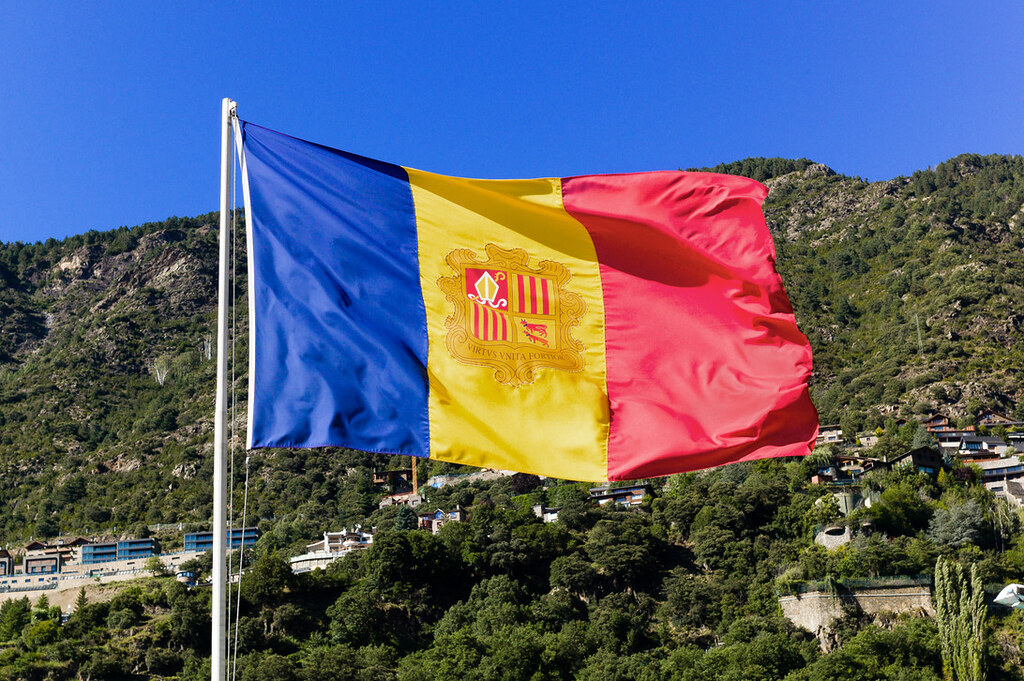
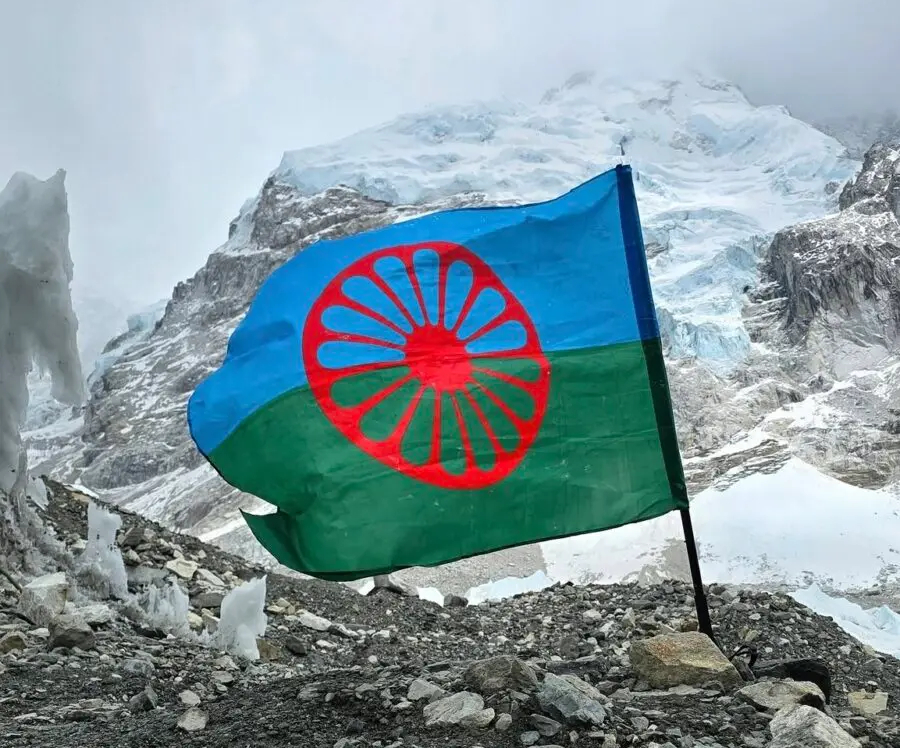
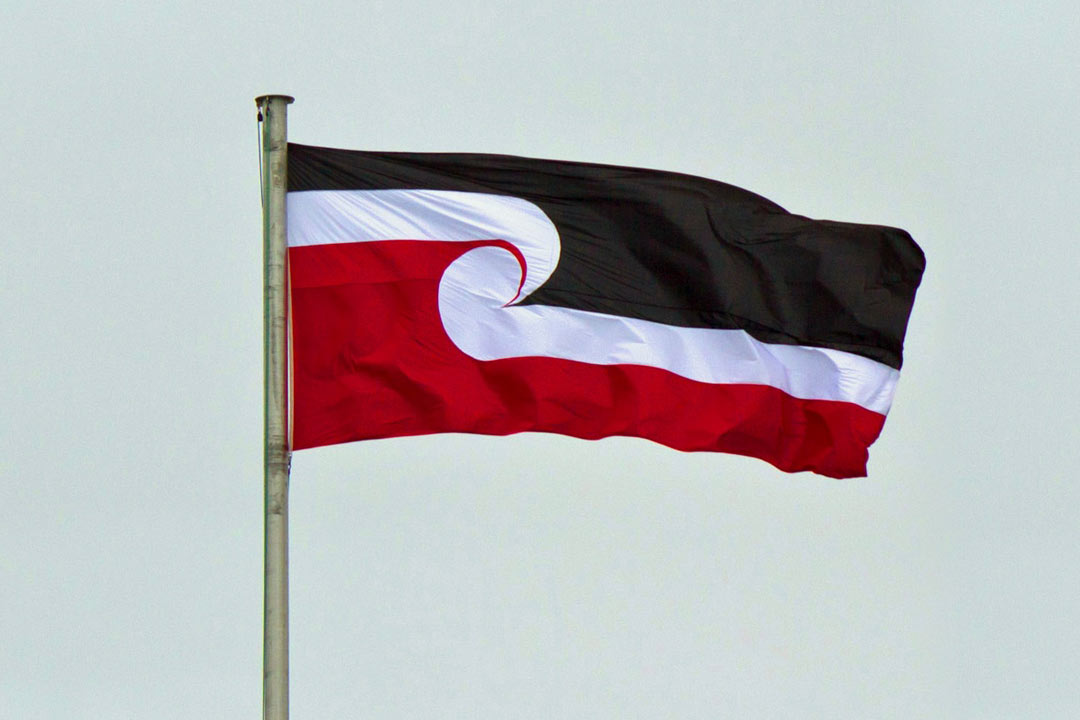
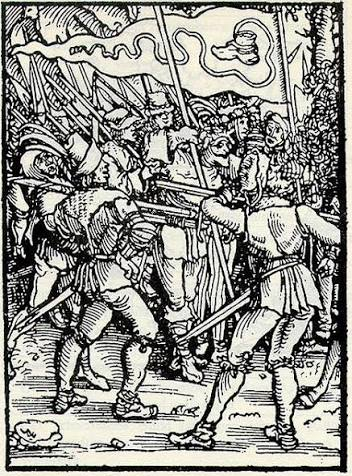
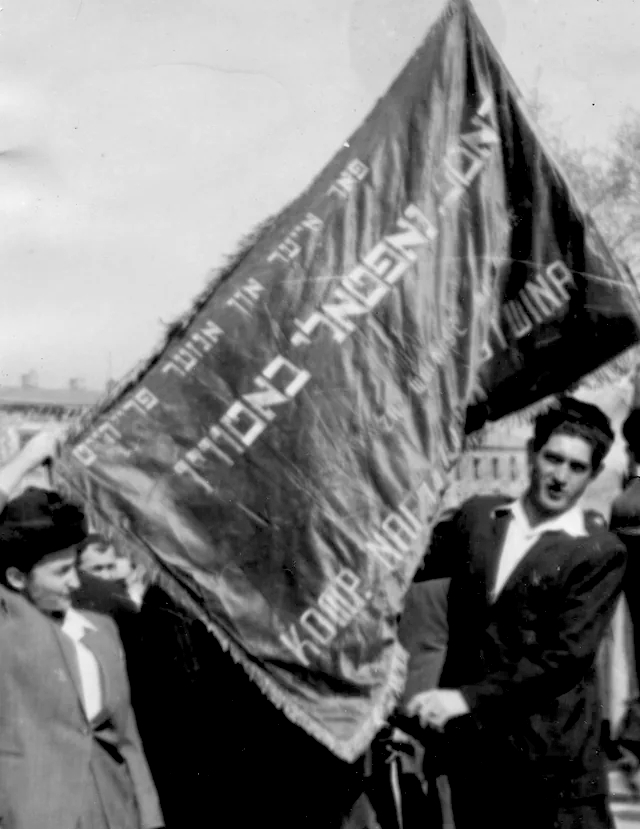
[Images: [top, left to right] Flag of Andorra, World Romani Congress flag flying atop Mount Everest, Māori national flag; [left] flag of the Bundschuh movement (Germany, 1490s-1520s); [right] flag of the Naftali Botwin Company of the International Brigade (Spain, 1937-1939)
|